Accéder au contenu principal

IKRA - Russian eggplant caviar/Russian aubergine caviar

Someone was looking for a "soft aubergine/eggplant spread with tomatoes" and I knew exactly what they were talking about. There's a dish in Russia, our Eastern neighbour, which is called IKRA or fake caviar. I got this recipe from Russian friend Galina back in Edinburgh sometimes around 2000. Still makes a regular appearance in our kitchen.  It's lovely on a slice of toast, or as a condiment or spread on a mezze-table. Russian aubergine spread IKRA 1 large aubergine/eggplant 1 large onion 2 garlic cloves 2 tomatoes 1 Tbsp olive oil or vegetable oil 2 Tbsp white wine vinegar or lemon juice salt and freshly ground black pepper fresh parsley or dill Prick the aubergine with a fork here and there, then place into a preheated 200C/400F oven and bake for about 60 minutes, until fully cooked and slightly charred on the outside. Flip over once or twice during baking. Remove from the oven, let it cool. Then cul half lengthwise and scoop out the flesh. Place into a cutting b...
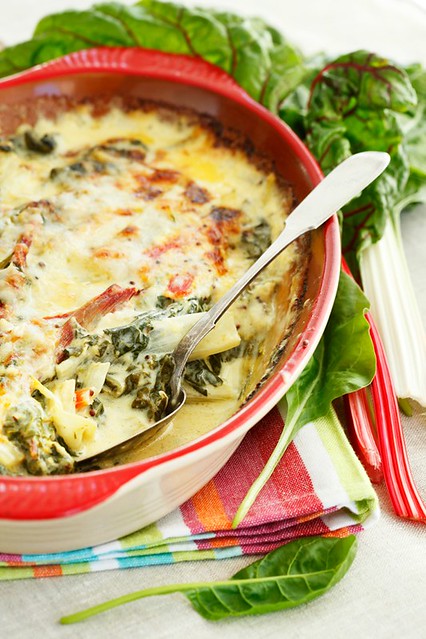
Swiss Chard Gratin with Cheese

LehtPeet 05

Recipe by Pille @ Nami-NamiAll photos by Juta Kübarsepp for the September 2014 issue of Kodu ja Aed ("Home and Garden"), an Estonian monthly magazine. I've been their food writer since October 2012. 

There's this wonderful cauliflower cheese recipe that I make pretty regularly, as it's super easy, quick, tasty and flavoursome. It's also gluten-free and low-carb, and I always have some cheese and mustard and cream in the fridge. Early this summer I realised that exactly the same cheese-cream-mustard topping works spectacularly well with Swiss chard stems and leaves. I grow around three or four varieties of Swiss chard in my garden, and they thrive well, so I've got a steady supply of those nutritious leafy greens.

This dish looks especially pretty when you use bright and colourful Swiss chard (also known as mangold, silverbeet, rainbow chard). Here's the selection from my garden:
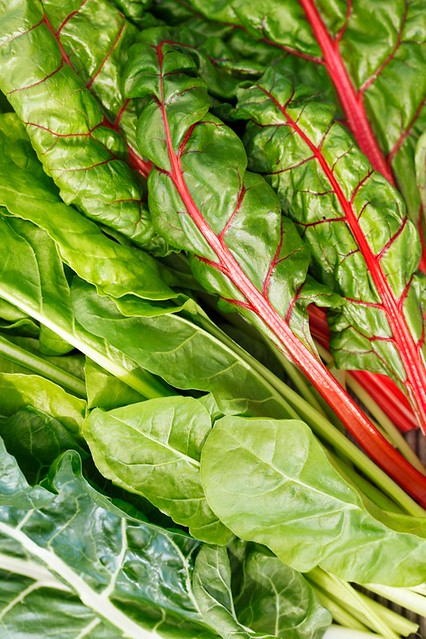
Swiss chard. Lehtpeet ehk mangold.

Swiss chard with cheese and cream
(Juustu-lehtpeedivorm)
Serves 4
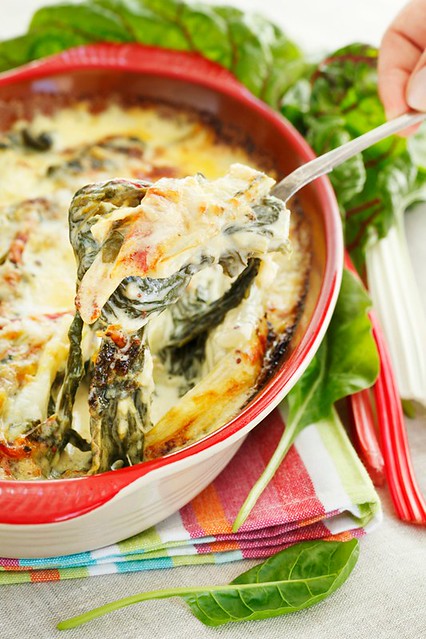
 LehtPeet 04

a good bunch of Swiss chard (about 400-450 grams)
200 ml double cream
1 Tbsp wholegrain mustard
150 g cheese, shredded
salt and black pepper

Separate the ribs/stems from the greens. Cut the ribs into 5 cm/2 inch pieces. Blanch the ribs in lightly salted boiling water for 3-4 minutes, until they soften. Then add the leaves, and cook for another minute. Drain thoroughly.

Mix the cream and mustard, fold in most of the cheese and season with salt and pepper. Add the Swiss chard stems and leaves.

Transfer the mixture into a buttered oven dish, sprinkle the remaining cheese on top.

Bake in the middle of a preheated 200 C/400 F oven for about 30 minutes, until the gratin is lovely golden and crisp on top.

Serve and enjoy.
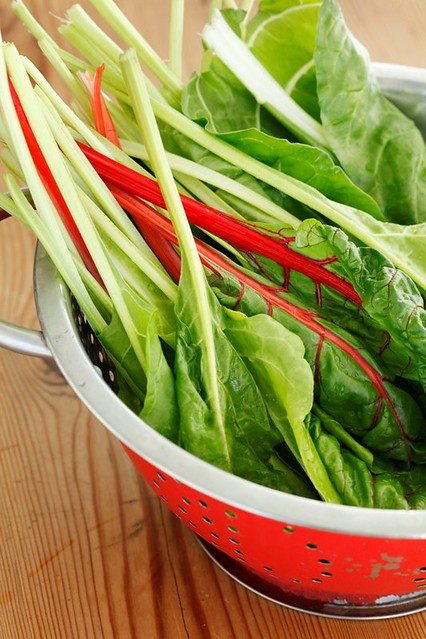
Swiss chard. Lehtpeet ehk mangold.

More Swiss chard gratin recipes:
Swiss chard gratin by Alanna @ A Veggie Venture
Baked Swiss chard stems with olive oil and Parmesan by Kalyn @ Kalyn's Kitchen
Swiss chard gratin with vegan bechamel by Clotilde @ Chocolate and Zucchini
Swiss chard gratin @ Whole Foods
Swiss chard gratin by Phoebe @ Feed Me Phoebe
Swiss chard au gratin @ Rachel Ray
Alice Waters' Swiss chard gratin @ Serious Eats

Commentaires

Posts les plus consultés de ce blog

IKRA - Russian eggplant caviar/Russian aubergine caviar

Someone was looking for a "soft aubergine/eggplant spread with tomatoes" and I knew exactly what they were talking about. There's a dish in Russia, our Eastern neighbour, which is called IKRA or fake caviar. I got this recipe from Russian friend Galina back in Edinburgh sometimes around 2000. Still makes a regular appearance in our kitchen.  It's lovely on a slice of toast, or as a condiment or spread on a mezze-table. Russian aubergine spread IKRA 1 large aubergine/eggplant 1 large onion 2 garlic cloves 2 tomatoes 1 Tbsp olive oil or vegetable oil 2 Tbsp white wine vinegar or lemon juice salt and freshly ground black pepper fresh parsley or dill Prick the aubergine with a fork here and there, then place into a preheated 200C/400F oven and bake for about 60 minutes, until fully cooked and slightly charred on the outside. Flip over once or twice during baking. Remove from the oven, let it cool. Then cul half lengthwise and scoop out the flesh. Place into a cutting b...

Festival food: Estonian Song and Dance Celebration 2014

This is a very special weekend for Estonia - our 26th Song Celebration and 19th Dance Celebration takes place. You'll get all the necessary information on this website , I'll focus on food here ;) It's a huge festival - with about 100 000 people gathered at the Song Festival Square, among them over 20 000 singers! You can imagine the amount of food you need to feed all those people during the weekend :) Festival food isn't usually known for its gastronomic finesse and wonderful flavour, but the food I saw yesterday at the Tallinna Lauluväljak (Song Festival Square) was pretty interesting. Here's a short overview for you, should you head to the celebrations today. The main eating area is marked with the red circle on the map below. "Merevärav" marks the "sea entrance" on Pirita road, so in case you're hungry, you should head to the right after entering the Song Festival grounds: It's also where the EESTI TOIDU VÄLJAK aka Estonian Food Co...

Wild garlic pesto aka ramson pesto recipe

(From the recipe archives - originally posted in April 2011. Three years on, this is still my favourite way of preparing wild garlic pesto. You can use either ramson or ramps). Wild garlic has arrived! Wild garlic, also known as ramson or bear's garlic ( Allium ursinum , ' karulauk ' in Estonian), is a very close relative to the wild leek aka ramp ( Allium tricoccum , ' grislilauk ' in Estonian). I've been eagerly waiting for this spring green, as I love both the flavour and the versatily of it, and it's a good health-booster at this time of the year. Well, if it's good enough for big brown bears, it's good enough for us :D Although I've been happily making a wild garlic pesto with pinenuts for a few years now, this one is a new favourite. There's more flavour, and somehow it's much more gutsier than the 'regular' wild garlic pesto. The idea to use almonds instead of pinenuts in a wild garlic pesto is from a German food magazin...